

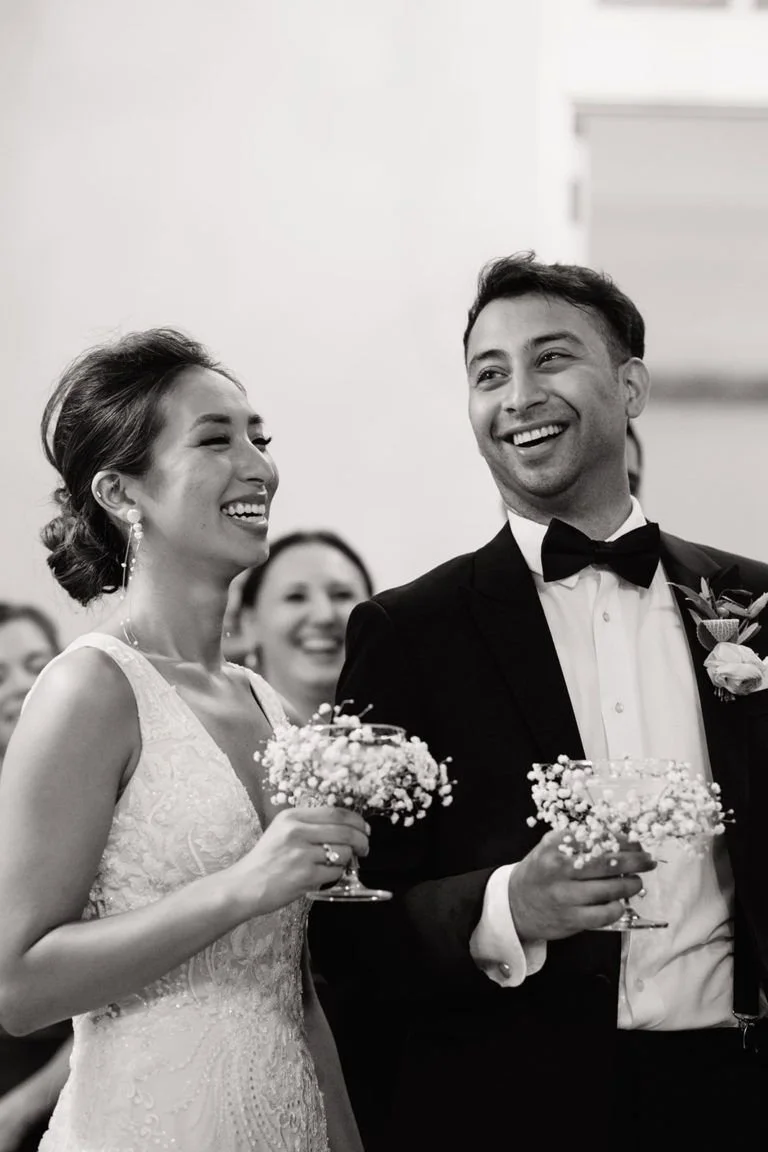
When two cultures come together in love, the destination can become more than a backdrop. It can become the third chapter of the story.
A wedding has always been a meeting of worlds.
Two families. Two histories. Two sets of traditions, rituals, languages and memories.
But for couples from different cultural backgrounds, a destination wedding introduces something else into the equation: a third culture.
A Chinese-European couple choosing Portugal. A Korean-European couple celebrating in Italy. A Japanese-French couple gathering their families in the South of France.
Suddenly, the wedding is no longer simply about bringing two cultures together.
It becomes an opportunity to create something entirely new.
At Moda Mariage, we believe this is where the beauty of an intercultural destination wedding truly begins: not in choosing which culture takes centre stage, but in creating a celebration where each culture, including that of the destination, has a meaningful place.
Explore our guide to the top 5 wedding venue styles in Italy for 2027.
Beyond the Traditional Multicultural Wedding
For many years, the idea of a multicultural wedding was approached as a question of combination.
How do you include both ceremonies?
How do you accommodate both families?
How do you incorporate two cuisines, two wardrobes or two sets of traditions?
These questions are important, but today's intercultural couples are looking beyond simply combining elements.
They are asking something more personal:
How can our wedding feel like us?
This shift towards more intentional celebrations is increasingly visible across the luxury wedding landscape, with couples moving away from one-size-fits-all traditions and toward celebrations that consciously reflect the people in the room where storytelling, culture and guest experience sit at the centre of the design.
For an Asian-European couple, this can mean moving beyond a wedding that feels divided into “Asian” and “European” moments.
Instead, the goal is to create a celebration with its own identity.
The Destination as the Third Culture
Choosing a destination that belongs to neither side of the couple can be incredibly powerful.
Portugal may introduce its architecture, gastronomy and traditions.
Italy may bring regional cuisine, craftsmanship and centuries of history.
France may contribute its art de vivre, architecture and culinary heritage.
The destination becomes more than a beautiful setting.
It becomes part of the conversation between the two cultures.
Consider a wedding in Portugal.
A couple might bring a Korean Paebaek ceremony into a Portuguese setting, incorporating local cuisine, language and hospitality throughout the weekend.
The result does not need to look like a Korean wedding transported to Portugal.
Nor does it need to become a Portuguese wedding with a Korean ceremony added to it.
It can become something that belongs to the couple alone.
That is the essence of the third culture.
Choosing a Destination That Adds to the Story
The first question should not always be:
“Where is the most beautiful place to get married?”
Instead, ask:
“What can this destination add to our story?”
Perhaps the couple has always been drawn to Mediterranean architecture.
Perhaps one partner loves Italian gastronomy while the other has a connection to contemporary European art.
Perhaps their families have never travelled together before, and the destination offers an opportunity to discover somewhere new as one group.
The most meaningful destination is often the one that creates a natural connection between the couple, their guests and their shared vision.
This is also part of a wider shift in luxury weddings, with couples increasingly drawn to destinations that feel more nuanced and less immediately recognisable — chosen for atmosphere, cultural identity and experience rather than simply because they are famous.
When Tradition Meets a New Landscape
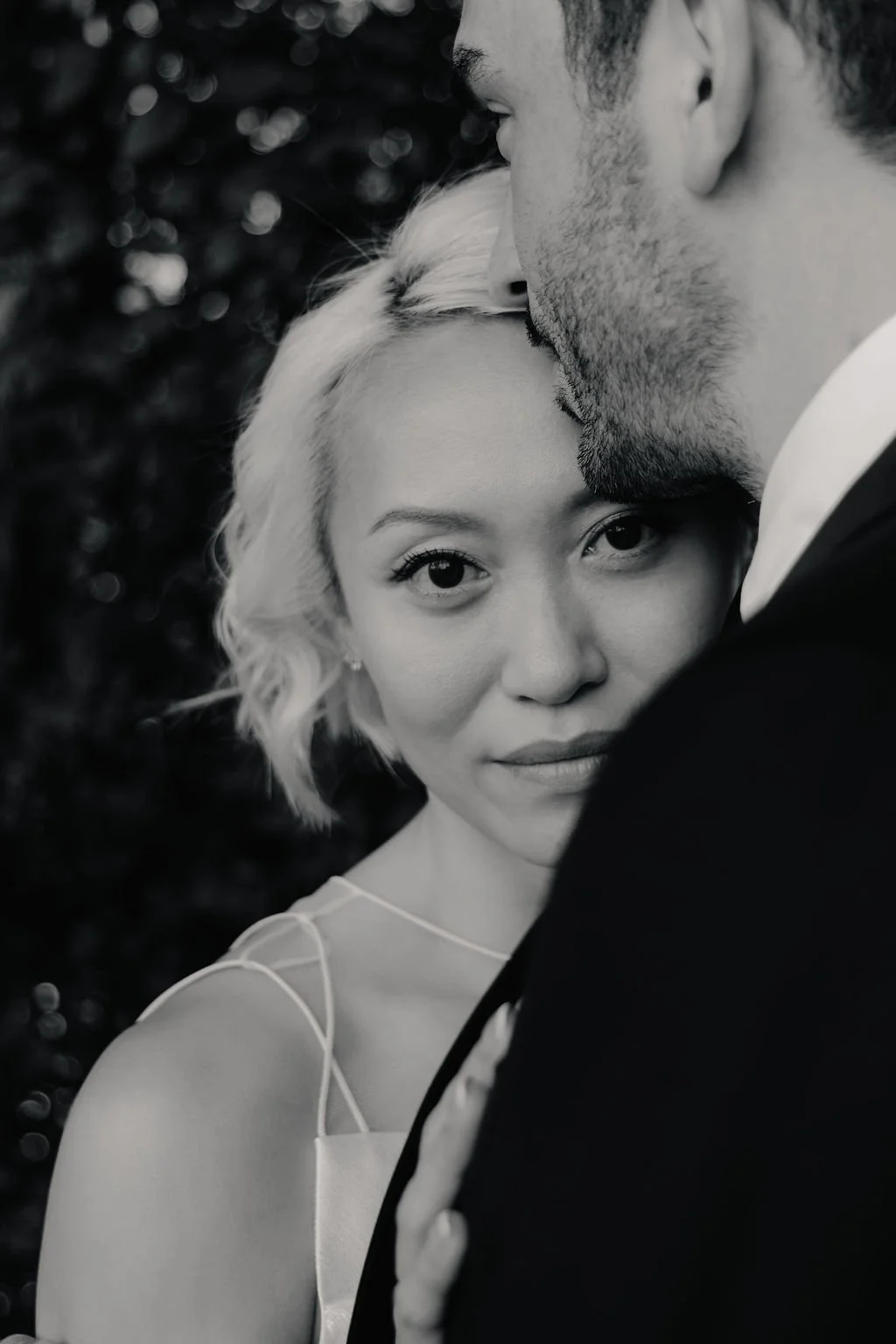
Tradition does not have to remain unchanged to remain meaningful.
One of the most beautiful aspects of an intercultural destination wedding is seeing familiar rituals in an unfamiliar environment.
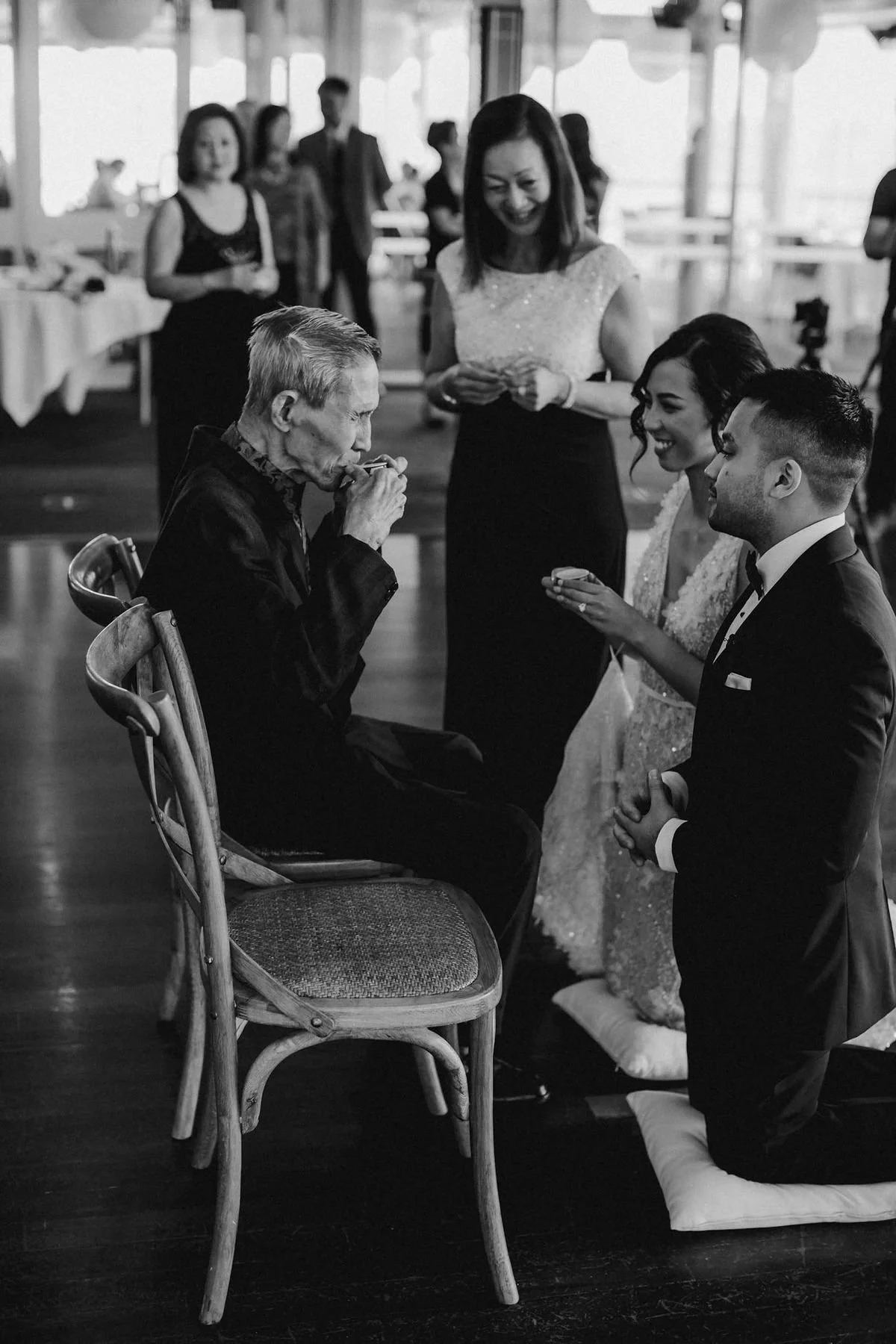
A tea ceremony beneath the arches of an Italian palazzo.
A traditional Asian wedding ritual surrounded by the gardens of a French château.
A modern Western ceremony followed by a family celebration rooted in Asian heritage.
The contrast can be extraordinary.
But the key is respect rather than replication.
A cultural tradition should never become a decorative prop simply because it photographs beautifully.
Its meaning should remain at the heart of the experience.
The destination, meanwhile, can contribute its own traditions organically, through local food, music, craftsmanship, architecture or hospitality.
The result is not a clash of cultures.
It is a dialogue.
Food: Where Cultures Come Together Naturally
Few elements of a wedding create connection as effortlessly as food.
For an intercultural destination wedding, the menu can become one of the most thoughtful ways to bring different worlds together.
A welcome dinner might introduce guests to the cuisine of the destination.
A reception menu could reinterpret dishes from both families through a contemporary culinary lens.
A late-night food moment might bring back something nostalgic from the couple's childhood.
The possibilities are endless.
And increasingly, food is being treated as an integral part of the wedding experience rather than simply catering, with personalised menus and thoughtful food moments becoming as central to a couple's story as the ceremony itself.
For a luxury wedding, this distinction matters.
The menu is no longer simply a list of courses.
It can tell a story.
Designing Without Creating a “Fusion” Wedding
There is a fine line between cultural integration and visual overload.
An intercultural wedding does not need to represent every tradition through a different colour, motif or decorative element.
In fact, restraint can make cultural references feel more luxurious.
Perhaps a family textile inspires the stationery.
A traditional motif is subtly translated into the menus.
An heirloom becomes part of the tablescape.
A European floral design incorporates flowers significant to the couple's heritage.
A contemporary dress is paired with a traditional accessory.
The references become discoveries rather than declarations.
The most sophisticated cultural design is often the kind that reveals itself slowly.
The Wedding Weekend as Cultural Exchange
A destination wedding creates something that a local wedding cannot always offer: time.
Time for two families to meet.
Time for friends from different countries to connect.
Time to experience a destination together.
And this is where the wedding weekend becomes particularly powerful.
Rather than treating the welcome dinner, ceremony, reception and farewell brunch as separate events, couples can create a narrative that moves naturally through the destination.
A welcome dinner introduces local flavours.
A daytime experience reveals the landscape.
A cultural ceremony connects the families.
The wedding reception brings everything together.
A farewell gathering gives everyone one final moment to celebrate.
Guests are no longer simply attending a wedding.
They are experiencing a place together.
Destination weddings increasingly reflect this shift, with couples using several days of celebrations to weave in family traditions, local culture, food and experiences rather than limiting the story to one wedding day.
Making Both Families Feel at Home
For intercultural couples, the challenge is not necessarily making everything familiar.
It is creating enough moments of recognition that everyone feels included.
Perhaps one family recognises a traditional ceremony.
Another connects with the destination's cuisine.
A bilingual welcome note makes guests feel considered.
A family member explains the meaning behind a ritual.
A traditional song is played alongside contemporary music.
These details may seem small, but they change how a wedding feels.
They tell guests:
You belong here too.
And that sense of belonging is perhaps one of the most important elements of a truly successful multicultural destination wedding.
Creating Something That Belongs to You
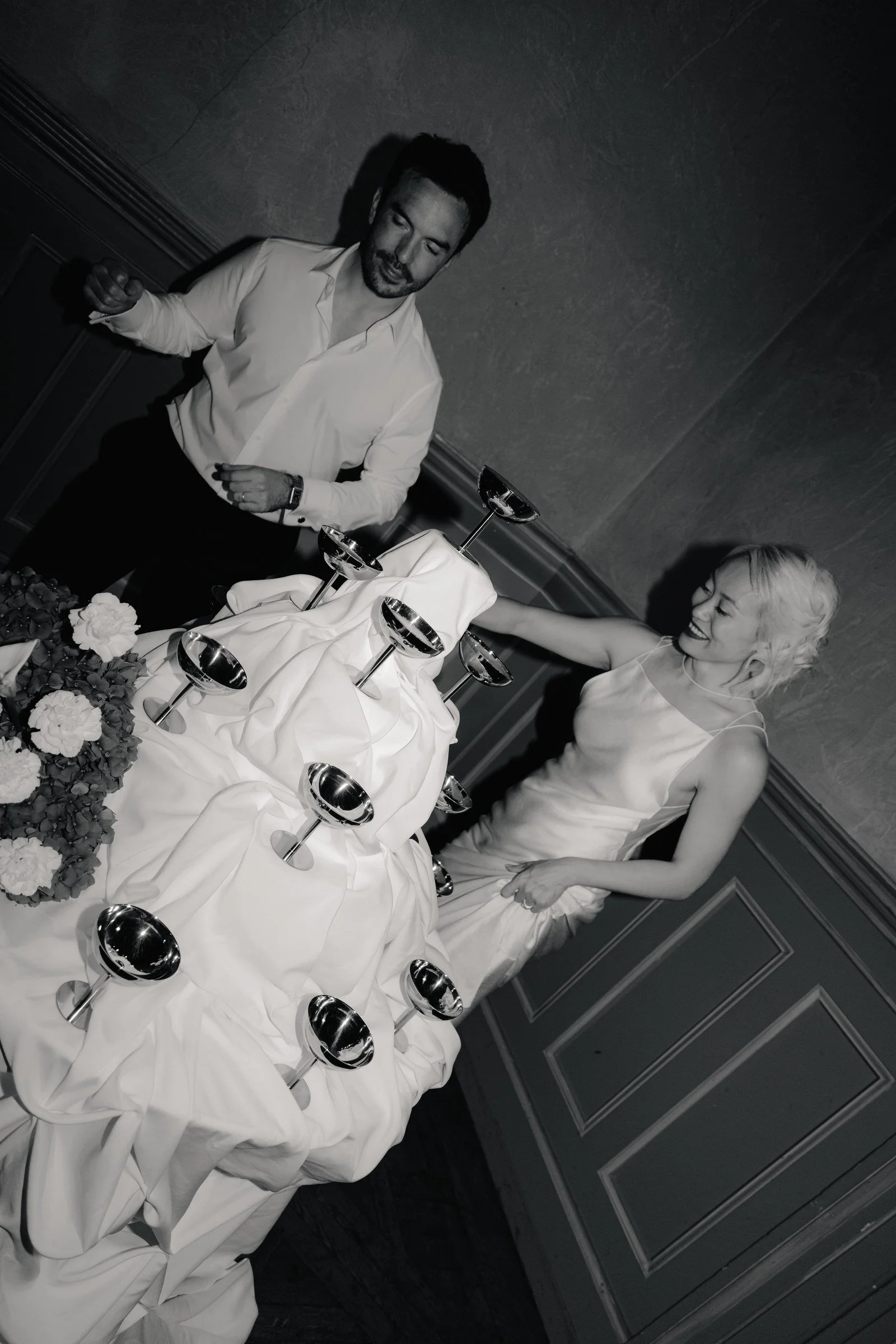
The most beautiful intercultural weddings are rarely the ones that try to perfectly reproduce everything.
They are the ones that make choices.
They decide which traditions are essential.
Which can be reinterpreted.
Which should remain intimate.
Which can be shared with guests.
And which new traditions they want to create themselves.
Because culture is not static.
It evolves with every generation, every relationship and every place we call home.
An Asian-European couple does not have to choose between two identities.
They can create a third.
One that reflects where they come from, where they are going and the place they have chosen to celebrate.
When Two Cultures Meet a Third
Perhaps that is the real magic of an intercultural destination wedding.
The destination does not have to belong to either family.
It simply has to give them space to create something together.
A European château can hold an Asian tea ceremony.
A Portuguese palace can become the setting for a Korean tradition.
An Italian villa can host a celebration shaped by two families from opposite sides of the world.
And somewhere between heritage and discovery, tradition and reinvention, the couple creates something that could never have existed anywhere else.
Not an Asian wedding in Europe.
Not a European wedding with Asian elements.
But a celebration with its own language.
Because when two cultures meet a third, the goal isn't to choose between them.
It is to create a world where all three belong.
At Moda Mariage, this is where we find the beauty of intercultural destination weddings, in celebrations that honour heritage while leaving room for discovery, creating experiences that feel deeply personal, beautifully considered and entirely their own.
FAQS
Can you plan a Chinese wedding in France?
Yes. We regularly work with couples bringing Chinese traditions — from tea ceremonies to banquet-style celebrations — into French destinations, blending them thoughtfully with the venue and local culture rather than treating them as separate add-ons.
Can you organise a tea ceremony in Europe?
Yes. Tea ceremonies, Paebaek rituals and other Asian wedding traditions can all be woven into a European destination wedding, with the venue, timing and setting designed around the ceremony rather than the ceremony being fitted around the venue.
Do you work with Indian, Southeast Asian and Chinese couples?
Yes. We work with couples from a wide range of Asian cultural backgrounds planning weddings in Europe, and design each celebration around the specific traditions, guest experience and family expectations that matter most to that couple.
Can you help couples planning remotely from Asia or the US?
Yes. Most of our intercultural couples plan from abroad. We coordinate across time zones through video calls, detailed planning documents and, where useful, a dedicated site visit, so distance never becomes a barrier to a well-planned wedding.
How far in advance should we start planning?
For a multi-day intercultural destination wedding, we recommend starting around 18 months in advance, particularly if the celebration involves multiple ceremonies, international guests or a sought-after venue.
What happens if our families disagree on parts of the wedding?
This is more common than couples expect, and it's part of what we help navigate. Our role is to listen to both sides, find where traditions can coexist rather than compete, and guide the couple toward decisions that feel authentic to them, not simply to whichever family speaks loudest.
If you're planning a wedding that brings two cultures — and a new destination — together, we'd love to hear your story. Get in touch with Moda Mariage to start planning your own third culture celebration.